GottaGottaGo App
DISEÑO UX/UI
Diseño de aplicaciones
Design Sprint
Proyecto Colaborativo
Diseño de aplicaciones con Figma
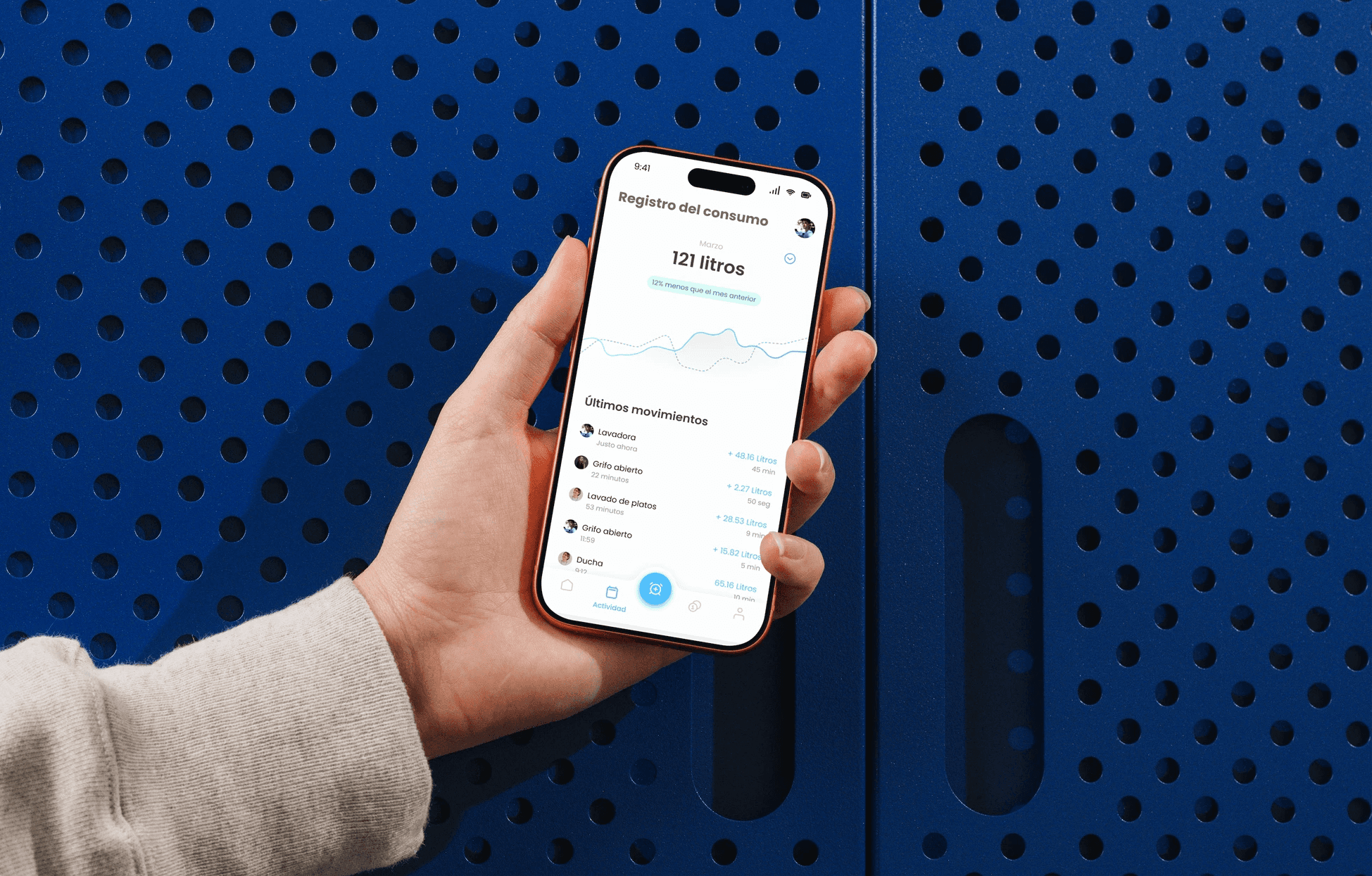
A gamified app that helps households reduce water consumption, combining consumption monitoring, challenges and rewards to build sustainable habits. Created as a case study in a one-week Design Sprint with a team of six. Created in response to the urgent need to reduce the consumption of natural resources, this solution combines technology and environmental education to transform everyday behaviours into positive actions towards a more sustainable future.
01 Context & problem
Households waste water largely because consumption is invisible and saving feels like an effort with no feedback. AquaSave set out to promote water savings at home by making consumption visible and turning saving into a habit through monitoring, challenges and rewards, using gamification to encourage sustainable behaviour.
02 My role
This was a team project from my UX/UI bootcamp, run as a classic one-week Design Sprint. Each day a different person acted as lead, distributing the tasks and checking that we advanced with the day's work and the project stayed on course. We all worked across every part of the design together: research, UI, information architecture and the design system. The real challenge was synchronising six people and reaching agreements quickly and by consensus. Opinions sometimes clashed and slowed us down, but we pushed through and closed the sprint with an original, professional result.


03 Process
The final proposal connects environmental awareness with practical daily action. Tips, progress feedback, and collaborative challenges help users reduce water use while feeling part of a shared goal, showing how digital design can support more sustainable routines through clarity, education, and positive reinforcement.

04 Solution & key decisions
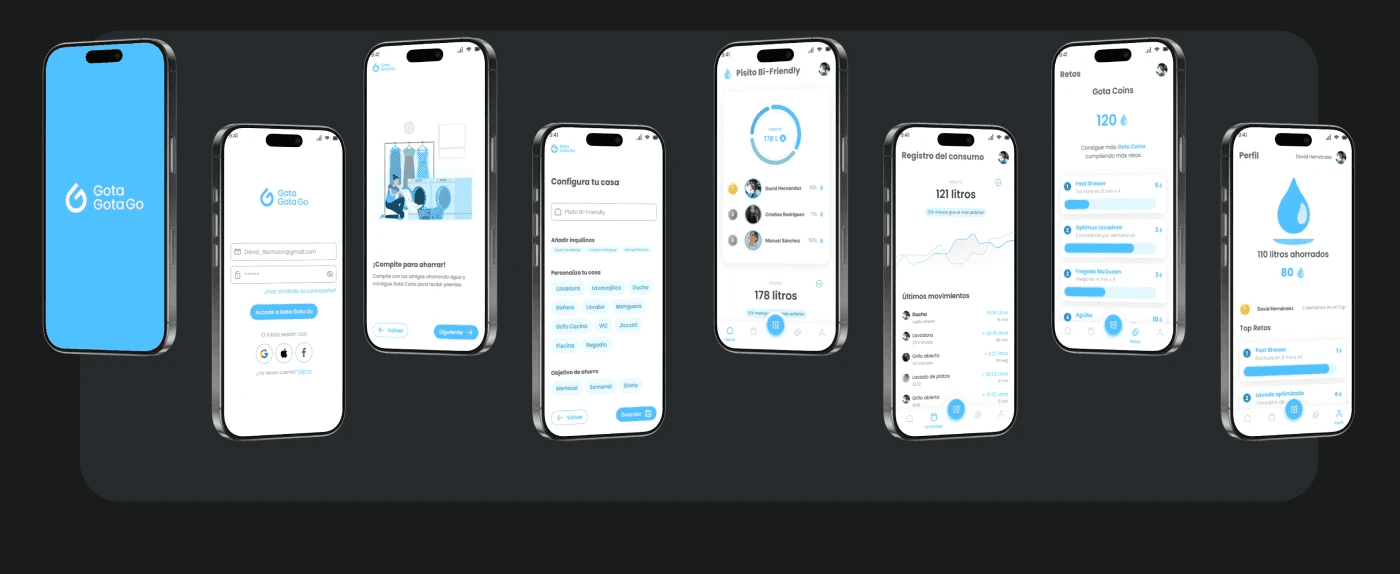
Along the way we built a simple, intuitive information architecture, a design system and components made specifically for the project, and an identity for the AquaSave brand. We followed the Design Sprint phases across the week, with one lead per day keeping us on track.
Consumption monitoring
See household water use and recent activity at a glance (litres consumed and saved).
Challenges & rewards
Complete challenges to earn Gota Coins, a gamified loop that keeps saving engaging.
Household setup
Configure your home and members, so the experience fits the real household.
Own brand & system
A dedicated identity and design system underpin the +8 screens.
05 Impact & learnings
A sustainable habit, gamified
An innovative idea, delivered fast
We shaped a genuinely original concept and made a lot of decisions in very little time, ending with a precise design and carefully crafted components.
What I learned
The value of the Design Sprint methodology, and how to reach consensus with other designers who bring different perspectives, even when opinions clash.
Where I added value
I contributed across research, UI, information architecture and the design system, and led the team for a day as part of the rotating lead.
Ver todo el proceso en mi Behance
GottaGottaGo App
DISEÑO UX/UI
Diseño de aplicaciones
Design Sprint
Proyecto Colaborativo
Diseño de aplicaciones con Figma
A gamified app that helps households reduce water consumption, combining consumption monitoring, challenges and rewards to build sustainable habits. Created as a case study in a one-week Design Sprint with a team of six. Created in response to the urgent need to reduce the consumption of natural resources, this solution combines technology and environmental education to transform everyday behaviours into positive actions towards a more sustainable future.
01 Context & problem
Households waste water largely because consumption is invisible and saving feels like an effort with no feedback. AquaSave set out to promote water savings at home by making consumption visible and turning saving into a habit through monitoring, challenges and rewards, using gamification to encourage sustainable behaviour.
02 My role
This was a team project from my UX/UI bootcamp, run as a classic one-week Design Sprint. Each day a different person acted as lead, distributing the tasks and checking that we advanced with the day's work and the project stayed on course. We all worked across every part of the design together: research, UI, information architecture and the design system. The real challenge was synchronising six people and reaching agreements quickly and by consensus. Opinions sometimes clashed and slowed us down, but we pushed through and closed the sprint with an original, professional result.
03 Process
The final proposal connects environmental awareness with practical daily action. Tips, progress feedback, and collaborative challenges help users reduce water use while feeling part of a shared goal, showing how digital design can support more sustainable routines through clarity, education, and positive reinforcement.
04 Solution & key decisions
Along the way we built a simple, intuitive information architecture, a design system and components made specifically for the project, and an identity for the AquaSave brand. We followed the Design Sprint phases across the week, with one lead per day keeping us on track.
Consumption monitoring
See household water use and recent activity at a glance (litres consumed and saved).
Challenges & rewards
Complete challenges to earn Gota Coins, a gamified loop that keeps saving engaging.
Household setup
Configure your home and members, so the experience fits the real household.
Own brand & system
A dedicated identity and design system underpin the +8 screens.
05 Impact & learnings
A sustainable habit, gamified
An innovative idea, delivered fast
We shaped a genuinely original concept and made a lot of decisions in very little time, ending with a precise design and carefully crafted components.
What I learned
The value of the Design Sprint methodology, and how to reach consensus with other designers who bring different perspectives, even when opinions clash.
Where I added value
I contributed across research, UI, information architecture and the design system, and led the team for a day as part of the rotating lead.
Ve todo el proceso en mi Behance
PRÓXIMO PROYECTO_
Padel In App
GottaGottaGo App
DISEÑO UX/UI
Diseño de aplicaciones
Design Sprint
Proyecto Colaborativo
Diseño de aplicaciones con Figma
A gamified app that helps households reduce water consumption, combining consumption monitoring, challenges and rewards to build sustainable habits. Created as a case study in a one-week Design Sprint with a team of six. Created in response to the urgent need to reduce the consumption of natural resources, this solution combines technology and environmental education to transform everyday behaviours into positive actions towards a more sustainable future.
01 Context & problem
Households waste water largely because consumption is invisible and saving feels like an effort with no feedback. AquaSave set out to promote water savings at home by making consumption visible and turning saving into a habit through monitoring, challenges and rewards, using gamification to encourage sustainable behaviour.
02 My role
This was a team project from my UX/UI bootcamp, run as a classic one-week Design Sprint. Each day a different person acted as lead, distributing the tasks and checking that we advanced with the day's work and the project stayed on course. We all worked across every part of the design together: research, UI, information architecture and the design system. The real challenge was synchronising six people and reaching agreements quickly and by consensus. Opinions sometimes clashed and slowed us down, but we pushed through and closed the sprint with an original, professional result.
03 Process
The final proposal connects environmental awareness with practical daily action. Tips, progress feedback, and collaborative challenges help users reduce water use while feeling part of a shared goal, showing how digital design can support more sustainable routines through clarity, education, and positive reinforcement.
04 Solution & key decisions
Along the way we built a simple, intuitive information architecture, a design system and components made specifically for the project, and an identity for the AquaSave brand. We followed the Design Sprint phases across the week, with one lead per day keeping us on track.
Consumption monitoring
See household water use and recent activity at a glance (litres consumed and saved).
Challenges & rewards
Complete challenges to earn Gota Coins, a gamified loop that keeps saving engaging.
Household setup
Configure your home and members, so the experience fits the real household.
Own brand & system
A dedicated identity and design system underpin the +8 screens.
05 Impact & learnings
A sustainable habit, gamified
An innovative idea, delivered fast
We shaped a genuinely original concept and made a lot of decisions in very little time, ending with a precise design and carefully crafted components.
What I learned
The value of the Design Sprint methodology, and how to reach consensus with other designers who bring different perspectives, even when opinions clash.
Where I added value
I contributed across research, UI, information architecture and the design system, and led the team for a day as part of the rotating lead.